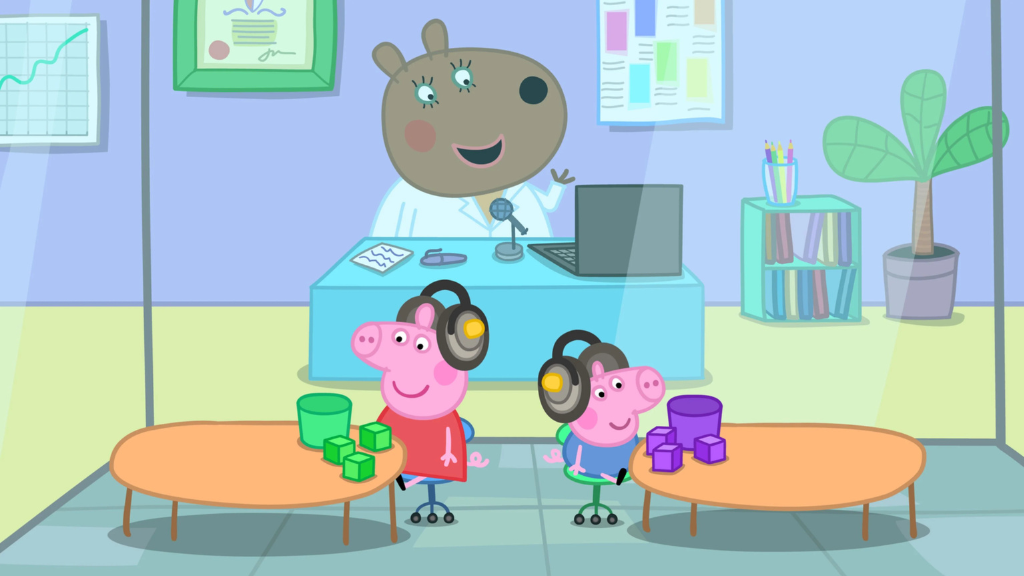


Popular children’s program Peppa Pig has made a positive stride in the representation of people with hearing loss. In partnership with the National Deaf Children’s Society, the TV show announced that a new episode will depict how Peppa’s family navigates a hearing loss diagnosis of her younger sibling George (Carr & Twigge, 2026). As World Hearing Loss Day approaches on 3 March, this episode raises an important conversation around the importance of diversity representation in children’s media, and the positive impact it can have on children with and without hearing loss.
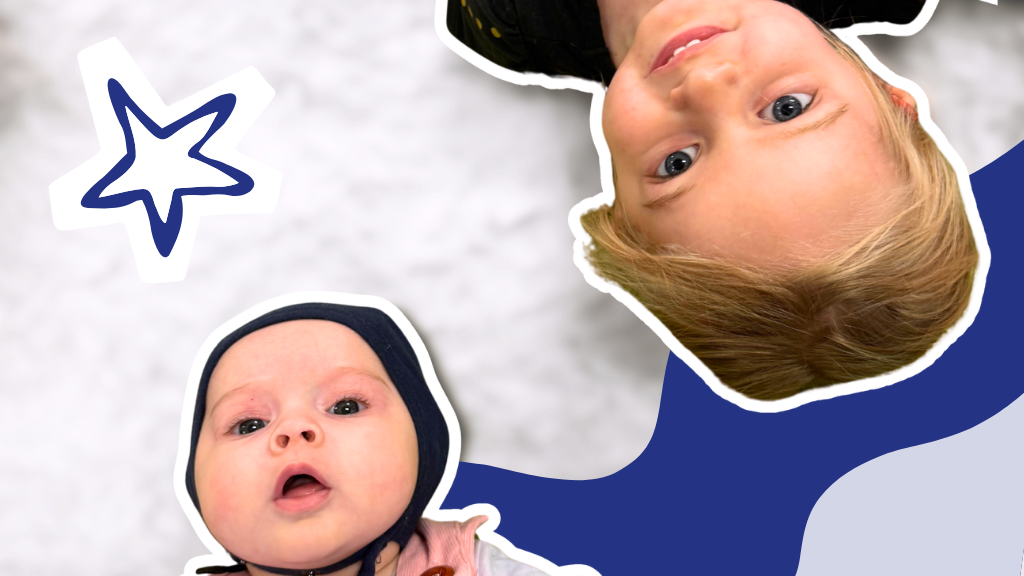
We may ask, why is media representation important, and more so why could it be important to children? To answer this question, we need to begin with understanding how prevalent media is in children’s lives. Media plays a role in every facet, all the way from communicating with friends and family through social media platforms, through to family movie nights around the TV. Children are increasingly exposed to media in different forms, and in particular, television has become an important source of learning and enjoyment for children.
In 2023, the Australian Bureau of Statistics announced that 90% of children engaged in screen-based activities for a minimum of 1 hour a week (ABS, 2023). Coupled with this, children’s brains are like sponges, they absorb a lot of information available, and research has shown that it influences what they learn about the world and how they behave towards others (Rhodes et al, 2025). This shows that most children in Australia engage with media, including television regularly, which means we must place importance on the content we are depicting to them.
As humans, we are often more comfortable with concepts that we have been repeatedly exposed to, and this is widely understood as the ‘mere exposure effect’ (Nickerson, 2023). As such, humans can be reluctant to explore new unfamiliar ideas due to social conditioning and biases (Saleem, 2025). In the context of Peppa Pig and hearing loss, exposure to various abilities at a young age can prepare children for the diversity of our society and foster empathy and understanding from early on.
Now that we have shed light on why it’s important for all children to be exposed to hearing loss through media, lets discuss why it matters to children with hearing loss. In consideration of the exposure effect, we are often unconsciously looking to see parts of ourselves reflected in the external world. Whether it be similar stories, cultures or even hair type, people often seek out these similarities in media, as it unconsciously validates our experiences and affirms our identity (Wood, 2025).
For children, this can be heightened, as they depend on cues in the external world to help them understand themselves and the people around them. When children do not see parts of themselves represented in media, it can foster feelings of isolation and invisibility, but when they do, it can boost their aspirations and self-confidence (Greenwood, 2022).
In the upcoming Peppa Pig episode, children with and without hearing loss share George the pig’s journey, from medical assessments to a hearing loss diagnosis, and importantly, they are exposed to how George’s family, friends and medical professionals work to support him and celebrate all the new sounds he can now hear. This can incredibly be meaningful to children with hearing loss and serve reassurance as they navigate similar experiences.
This episode celebrates the diversity of abilities amongst children today and empowers them to navigate the world with confidence and empathy for others.
Reference List
Australian Bureau of Statistics. (2023, 21 April). Children spending more hours a week on screen
based activities (Media release). https://www.abs.gov.au/media-centre/media-releases/children-spending-more-hours-week-screen-based-activities
Greenwood, D. (2022, 28 October). When characters on the screen help you feel seen.
Psychology Today. https://www.psychologytoday.com/au/blog/mirror-mirror/202210/when-characters-the-screen-help-you-feel-seen
Nickerson. (2023.). Mere exposure effect in psychology: Biases & heuristics. https://www.simplypsychology.org/mere-exposure-effect.html
Rhodes et al. (2025, 10 April). Children’s shows today: Their impact on child development and behaviour. https://sites.uab.edu/humanrights/2025/04/10/childrens-shows-today-their-impact-on-child-development-and-behavior/
Saleem, M. (2025, 15 August). Representation in media can deepen or undo prejudice. Society
for Personality and Social Psychology. https://spsp.org/news/character-and-context-blog/saleem-representation-in-media-can-deepen-or-undo-prejudice
Wood, N. (2025, 26 January). The power of representation – Why diversity and inclusion in media
matters. https://joinarcc.org/the-power-of-representation-why-diversity-and-inclusion-in-media-matters/