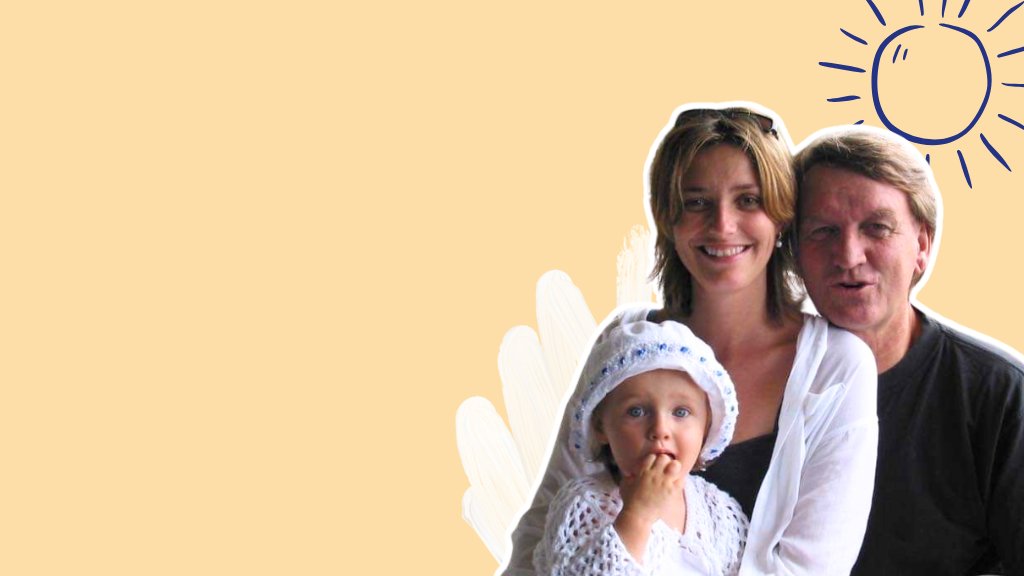



On 29 December 1994, Charlotte entered the world in Sydney, born to her mother Julia and father Baz, a moment filled with joy as they welcomed her into the family.
It was by around five months of age that Julia began to notice something wasn’t quite right. Charlotte wasn’t responding to sound in the way a baby typically would. Instead, she appeared to rely more on visual cues, turning toward movement in a room or shadows passing by, and reacting to vibrations such as a saucepan dropping, rather than to noise itself.
Julia trusted her instincts and sought medical advice to have Charlotte’s hearing assessed. At first, she was informed that nothing was wrong with Charlotte’s hearing. Still, she continued to advocate for her daughter, certain that something wasn’t quite right, and persisted in her search for answers.
That persistence led to a turning point.
Julia was eventually connected with a specialist, Dr Smart, who visited the family home to assess baby Charlotte and carry out early hearing tests while she lay in her cot. When the assessment was complete, he confirmed that Charlotte was not responding to sound.
This marked the beginning of Charlotte’s diagnosis of bilateral profound hearing loss.
For Julia, the moment was understandably stressful, but it also brought a sense of clarity for her and her family, confirming what she had long suspected.
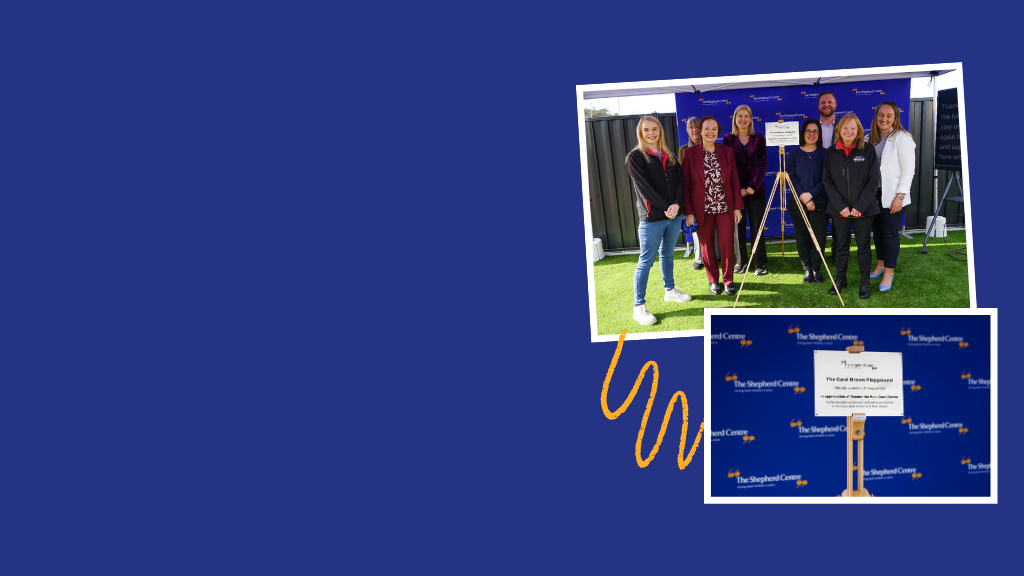
From there, Charlotte and her family were connected with The Shepherd Centre,
Where deaf children are supported to learn, connect and thrive.
For Charlotte’s family, this meant more than clinical care. It meant being supported through a team-based model of care that recognised parents as a child’s first and most important teachers, and that early communication foundations are built through partnership, consistency and trust.
Charlotte later received a cochlear implant in her right ear and received ongoing therapy, cochlear implant programming and specialist support focused on developing listening and spoken language skills. Reflecting on those early years, she speaks fondly of the people who supported her and her family.
“The people who work in this space, they’re honestly angels,” Charlotte said. “I can guarantee I wouldn’t be where I am today without them. Everything they’ve helped me with has led me to sitting here now, feeling so grateful for everything I’ve been given.”
As Charlotte grew, Julia remained her strongest advocate, working closely with her care team and making important decisions about her education, including enrolling her in mainstream schooling. Charlotte now recognises this as a significant step that helped shape her independence and confidence.
Her school years included both challenges and strong support. Navigating busy classrooms and communication demands required persistence, but she was also surrounded by people who made a lasting difference. Her Year 3 primary school teacher, in particular, stands out in her memory as someone who encouraged and believed in her.
Charlotte also remembers Lorraine, one of her speech therapists at The Shepherd Centre who supported her journey. Lorraine’s guidance and encouragement were instrumental in helping Charlotte develop the communication skills and confidence that would shape her future.
“I had some incredible teachers,” Charlotte said. “They gave me encouragement and hope, and that really stayed with me.”
These experiences reflect a broader truth at the heart of The Shepherd Centre’s work, that early intervention does not end in early childhood. It builds the foundation for lifelong learning, participation and confidence.
As Charlotte moved into adulthood, her journey into education felt like a natural continuation of that foundation. She went on to study teaching at university and became a primary school teacher, a pathway shaped by her own experiences of being supported and encouraged throughout her schooling.
In her career, Charlotte taught both hearing and deaf students. She describes these experiences as particularly meaningful, especially when students recognised that their teacher shared their lived experience of hearing loss.
“When I’ve taught deaf children and they realise their teacher understands what it’s like to be them, it’s just incredible,” she said. “There’s an instant connection. They feel seen.”
Today, Charlotte is a mother of three living on the Sunshine Coast in Queensland. Her life is full of family routines, school schedules, sport, dance and the everyday rhythm of raising young children.
Alongside motherhood, she built a photography business that began after the birth of her first child. What started as capturing moments for her own family gradually grew as others asked her to do the same.
“I just started taking photos of my son,” she said. “Then people started asking me to do theirs, and it grew from there.”
Charlotte describes herself as determined, independent and energetic, someone who fully commits to whatever she takes on.
“I just go all in,” she said. “Sometimes it works out, sometimes it doesn’t, but I always give it everything.”
Her hearing journey continues today, with ongoing cochlear implant care and an upcoming device upgrade that she is looking forward to.
“It’s amazing how far hearing technology has come,” she said. “I’m really looking forward to what’s next.”
When reflecting on her journey, Charlotte describes it as transformative. For her, “having a voice” is about connection, communication and belonging.
“It means being able to communicate with the people I love,” she said. “Hearing my kids talk, their laughter, all those everyday moments… I’m just so grateful for that.”
And at its core, it is about being able to express love and connection in everyday life.
“Being able to tell someone you love them, or that you miss them… that’s what having a voice means to me.”
For families beginning their own journey, Charlotte offers reassurance grounded in experience and shaped by the support she received.
“Don’t be scared,” she said. “Accept the help. Trust your instincts.”
She also reflects the message at the heart of The Shepherd Centre’s approach, that with early, family centred support, children with hearing loss can develop the communication skills they need to thrive.
“It does get easier,” she said. “And things really will be okay.”
Charlotte’s story reflects the importance of early detection, family advocacy and specialist support. It also reflects the long-term impact of a team-based, evidence-backed model of care like that of The Shepherd Centre, where families are supported not only in early childhood, but across key stages of development, education and independence, empowering deaf children to listen, speak and have thrive.